
Best Odds Guaranteed in Horse Racing — How BOG Works and Why It Matters
 Available in US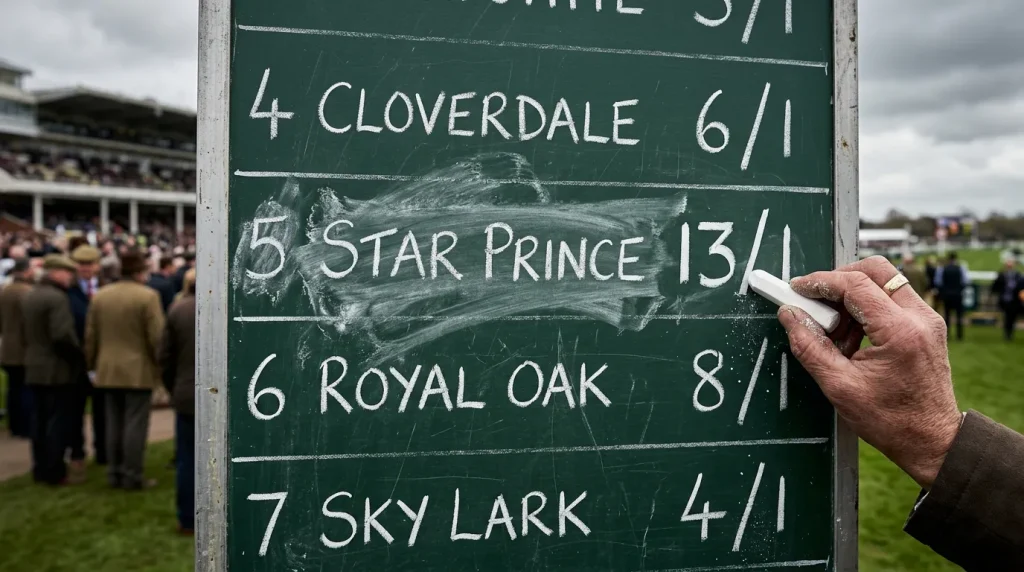
Best Odds Guaranteed is the free upgrade every punter should claim — and remarkably, many do not. BOG is a promotion offered by most major UK bookmakers that guarantees you will be paid at whichever is higher: the price you took when you placed your bet, or the starting price (SP) at the time the race goes off. If the SP is better than your price, you get the bigger payout automatically. If the SP is worse, your original price stands. There is no downside. It is the closest thing to a no-strings-attached benefit that the betting industry offers.
The reason bookmakers can afford to provide BOG is embedded in the scale of their overall margin. According to the Gambling Commission’s industry statistics, gross gambling yield from online horse racing betting in the UK was £766.7 million for the financial year ending March 2026. That figure represents the net revenue bookmakers retained after paying out all winning bets. BOG is funded from that margin — it is a customer-acquisition and retention cost, not an act of generosity. But for the individual punter, the practical effect is the same: free extra value on every qualifying winning bet.
Understanding how BOG works, where its limits lie and how to structure your betting to maximise its benefit is one of the simplest improvements you can make to your racing process.
How Best Odds Guaranteed Works
The mechanics are straightforward. You place a bet on a horse at the currently advertised odds — say 5/1 — in the morning or afternoon. Between the time you place your bet and the time the race starts, the market moves. If the horse’s odds drift to 7/1 by the off, the bookmaker’s BOG guarantee means you are paid at 7/1 rather than the 5/1 you originally took. Your £10 bet at 5/1 would normally return £60, but with BOG it returns £80. The extra £20 costs you nothing — the upgrade is automatic.
If the odds move the other way — shortening from 5/1 to 3/1 — your original 5/1 price is protected. You still receive the 5/1 payout. BOG only triggers when the SP is higher than your price, never when it is lower. In effect, you have a free option: the upside of market drift without the downside of market contraction.
A worked example makes this concrete. You back Horse A at 4/1 (decimal 5.0) with a £20 win bet at 10am. By the 2:30 off, the SP is 6/1 (decimal 7.0). Without BOG, your return on a winning bet is £20 × 5.0 = £100. With BOG, your return is £20 × 7.0 = £140. That is £40 of extra profit generated purely by the bookmaker’s policy, with no additional risk or cost on your part. If Horse A loses, the BOG guarantee makes no difference — you lose your £20 stake either way. BOG only benefits winning bets, which is why it adds up to a meaningful sum over time for any punter who backs winners at a reasonable rate.
How Much Extra Value Does BOG Deliver?
The value of BOG depends on two factors: how often horses drift (SP higher than the morning price) and how large the average drift is. Both factors work in the punter’s favour more often than many people realise.
Horses drift for many reasons: late market intelligence, non-runner announcements that reshape the field, money arriving for rival horses, or simply a rebalancing of the bookmaker’s book. Studies of morning-to-SP price movements show that a significant proportion of runners — estimates range from 30% to 50% depending on the race type and time of day — drift by at least one increment between the early-morning price and the SP. Among those that drift, the average movement is material: a shift from 4/1 to 5/1 is a 25% increase in the payout on a winning bet.
Data from BetTurtle’s analysis shows that favourites win between 36% and 38% of races regardless of going conditions. Among those winning favourites, a meaningful fraction will have drifted from their morning price — particularly in races where a non-runner strengthens the case for a rival and the favourite’s odds adjust accordingly. For punters who back favourites or second-favourites early in the day, BOG captures that drift automatically.
Over the course of a year, a regular punter placing 200–300 bets might see BOG trigger on 20–40 winning bets, adding anywhere from a few pence to several pounds each time. The cumulative effect is an ROI boost of roughly 1–3% on turnover, depending on your betting profile. That may not sound dramatic, but for a punter operating on tight margins — where the difference between a 2% loss and a 1% gain defines the year — it is the difference between being a losing bettor and a breakeven one.
Exclusions, Restrictions and Fine Print
BOG is not unlimited, and the fine print varies by bookmaker in ways that can significantly affect its practical value.
Race type exclusions are the most common restriction. Most bookmakers offer BOG on UK and Irish racing only — international meetings, all-weather fixtures and tote-pool bets are frequently excluded. Some firms extend BOG to selected international events (major French races, for example), but this is the exception rather than the rule. If you bet on racing beyond the UK and Ireland, check whether BOG applies before assuming it does.
Ante-post bets are almost universally excluded from BOG. The guarantee applies only to bets placed on the day of the race (or, at the earliest, the evening before), not to bets placed weeks or months in advance. This makes sense from the bookmaker’s perspective — ante-post prices are deliberately wider to compensate for non-runner risk, and applying BOG to them would create an unacceptable liability.
Enhanced odds and price-boosted selections are typically excluded too. If a bookmaker offers “super-boosted” odds of 10/1 on a horse that is 5/1 elsewhere, BOG will not apply to that enhanced price. You receive the boosted price if the horse wins, but you are not entitled to a further upgrade if the SP exceeds it.
Bet size caps exist at some firms, though they are rarely publicised. A bookmaker may apply BOG to bets up to £500 but cap the upgrade at a certain payout level. Large-stakes punters should check terms explicitly, because a BOG restriction on a significant bet can cost real money.
Account-restricted punters may lose access to BOG entirely. If a bookmaker has limited your maximum stake due to sustained profitability, the BOG guarantee may be withdrawn alongside other promotional benefits. This is another reason to maintain accounts with multiple bookmakers — ensuring that at least some of your betting continues to benefit from the upgrade.
A Simple BOG Strategy
The optimal BOG strategy is simple: bet early when you see value, and let BOG protect you against further drift. That single sentence captures the entire approach.
If you study the racecards in the morning and identify a horse whose price represents value at the current odds, take the price immediately. If the horse drifts further (which means the market disagrees with you and the price gets even bigger), BOG guarantees you receive the higher SP. You lose nothing. If the horse shortens (the market agrees with you and the price gets smaller), you have locked in a better price than the one now available. You gain nothing from BOG but retain the value you originally identified.
The mistake to avoid is waiting for the price to drift before placing your bet, hoping to get a bigger number. While you wait, the horse might shorten instead — and you have missed the value that was available an hour ago. BOG removes the need to time the market perfectly. Take the price when you see value, and let the promotion handle the rest.
A secondary strategy involves comparing BOG terms across bookmakers. If two firms both offer the same horse at 5/1 but one has BOG and the other does not, the choice is obvious. If one firm offers 5/1 with BOG and another offers 11/2 without BOG, the calculation is slightly more nuanced: the 11/2 price gives you a guaranteed higher payout right now, while the 5/1 with BOG gives you a lower guaranteed price but the option of an even bigger payout if the horse drifts. In practice, BOG on the slightly lower price is usually the better deal, because the option value of the upgrade outweighs the small price difference — especially on horses whose odds are likely to move.
Use BOG on every qualifying bet, with every bookmaker that offers it. It is the simplest, most consistent source of free value in UK racing. And unlike promotional offers that require you to change your behaviour — bet more, bet bigger, bet on markets you would not normally touch — BOG rewards you for doing exactly what you were going to do anyway.
