
Grand National Tips — How to Find a Winner in the World’s Biggest Race
 Available in US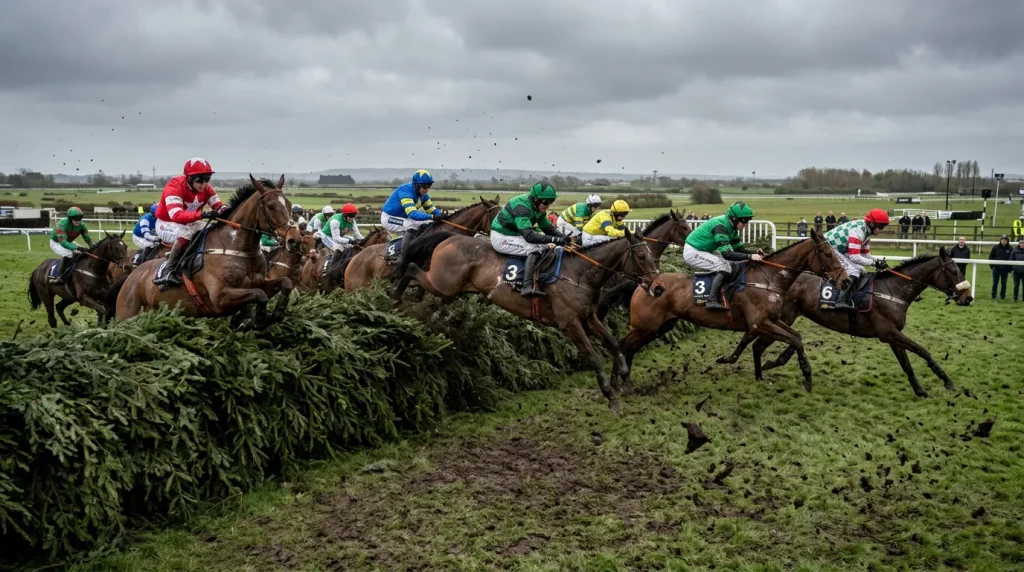
The Grand National is not just a horse race. It is a national event — the one day of the year when people who never normally bet walk into a bookmaker’s shop or open a betting app and put money on a horse. According to data published by Entain, the Grand National attracted the highest number of individual bets of any sporting event in the world in 2026, surpassing the Super Bowl for the second consecutive year. In 2026, the Grand National generated 700% more individual wagers than the Cheltenham Gold Cup. No other race, in any country, commands that level of betting participation.
That mass participation is precisely what makes the Grand National both fascinating and treacherous for serious punters. The casual money pouring into the market — bets placed on names, colours, jockey fame or pure whim — distorts the odds in ways that create both risk and opportunity. Meanwhile, the race itself presents unique challenges: a maximum field of 40, thirty demanding fences and a distance of four miles and two-and-a-half furlongs that tests stamina, jumping and luck in roughly equal measure.
A William Hill spokesperson, describing the scale of the Cheltenham Festival betting market in 2026, noted that around £450 million was expected to be wagered across that four-day meeting alone. The Grand National, condensed into a single race, generates betting volumes on a comparable scale. The money is enormous, the field is enormous, and the challenge for anyone trying to find the winner is, correspondingly, enormous. But the data offers footholds, and knowing where to look is half the battle.
Grand National Betting Trends and Key Statistics
The Grand National is run at Aintree Racecourse in Liverpool every April, over a distance of approximately four miles and two-and-a-half furlongs. The field is capped at 40 runners — the largest field in any British horse race — and the course includes 30 fences, many of which are unique to Aintree: the Chair, Becher’s Brook, the Canal Turn and Valentine’s Brook are obstacles that exist nowhere else in racing.
Betting turnover on the race is staggering. According to UKBookmakers.org, the main race was expected to generate over £200 million in betting turnover in 2026, with the full Aintree Festival weekend exceeding £250 million. Roughly £10 million of that — about 5% — was estimated to have gone to unlicensed betting operators, a reminder that the sheer scale of the event attracts illegitimate activity alongside legitimate wagering.
The prize fund typically exceeds £1 million for the main race, making it the richest National Hunt handicap in the calendar. Television audiences of eight to ten million are standard, and the race generates more column inches in the national press than any other sporting event in the UK outside of football’s showpiece finals. For many people, the Grand National is their only exposure to horse racing in any given year — and for the betting market, that influx of once-a-year punters creates a uniquely distorted pricing environment.
Selection Factors Unique to the Grand National
The Grand National is unlike any other race in the calendar, and the selection criteria that work elsewhere do not map neatly onto Aintree’s unique demands. Several factors are specific to this race and should be weighted heavily in any analysis.
Weight is the primary handicapping variable. The National is a handicap, meaning horses carry different weights based on their official rating, with the topweight carrying 11st 12lb and the bottom weight around 10st. Historical data consistently shows that winners tend to come from the middle to lower end of the weight range, typically carrying between 10st and 11st 4lb. Horses at the very top of the weights — the best-rated runners on paper — rarely win because the combination of extreme distance, 30 testing fences and a heavy burden takes its toll. The race punishes class when that class is loaded down with lead.
Age is the second critical filter. Winners cluster overwhelmingly in the eight-to-ten age bracket. Younger horses (seven or below) generally lack the maturity and experience to negotiate 30 unique fences over four miles in a 40-horse field. Older horses (eleven and above) may have the experience but tend to lack the stamina and recovery to sustain the effort. The sweet spot is a horse old enough to know what it is doing and young enough to have the physical reserves to do it at the end of an exhausting race.
Jumping record is a filter that many casual punters ignore entirely. A horse that falls or unseats regularly in normal races is a serious liability in the National, where the fences are stiffer and the field traffic is more hazardous. Previous experience of Aintree’s National fences — whether from running in the Topham Trophy or a previous National — is a meaningful advantage. Horses encountering the course for the first time face an information gap that experience closes.
Going conditions shape the outcome more here than in most races. The National is run in April, and the ground can range from Good to Soft. Softer ground favours stamina over speed and tends to produce higher attrition — more tired horses, more fallers, more gaps for patient riders to exploit. Checking each contender’s form on the prevailing ground type is non-negotiable.
Historical Patterns and What They Tell Us
Over the last two decades, certain patterns in Grand National results have been remarkably consistent, and while past performance does not guarantee future outcomes, ignoring durable trends is a choice you make at your own expense.
Weight ranges of winners cluster tightly. The vast majority of winners carried between 10st 2lb and 11st 4lb. Winners carrying 11st 6lb or above have been exceptionally rare in the modern era, reinforcing the principle that the extreme distance and demanding fences punish top-weighted horses disproportionately.
Odds ranges tell a similar story. Most winners have been returned at prices between 8/1 and 33/1, with a significant cluster in the 10/1 to 25/1 range. Very short-priced favourites (under 6/1) rarely win — the race is too unpredictable for any horse to be a strong favourite — and extreme outsiders (66/1 and beyond) win rarely enough that backing them is a lottery ticket rather than a strategy. The productive betting range sits in the middle: horses priced long enough to offer a meaningful each-way return but short enough to be taken seriously by the market.
Trainer patterns are worth noting. Certain yards have a structural advantage in the National because they train on land that mimics Aintree’s terrain, or because they have developed a programme specifically aimed at preparing National horses. Lucinda Russell, Nigel Twiston-Davies and Gordon Elliott are among the trainers who have produced multiple National runners and winners, and their entries in any given year carry additional weight because of the yard’s track record with the race’s specific demands.
Recent form heading into the National is a less reliable predictor than you might expect. Some winners arrive on the back of a string of solid performances; others arrive off a disappointing run that lowered their handicap mark — and therefore their carried weight — to a level that gave them a better chance at Aintree. A poor run in February is not necessarily bad news for a National contender if it resulted in a lower weight allocation in April.
Grand National Betting Strategy
The Grand National requires a distinct betting strategy, because the race itself is distinct from anything else in the calendar.
Each-way betting is the natural format for a 40-runner handicap. Bookmakers typically pay four, five or even six places on the National, and extra-place promotions push that number even higher. At those terms, a horse priced at 16/1 offers a place return of 4/1 at quarter the odds — a meaningful payout for finishing in the first four, five or six without winning. The each-way structure converts the National’s inherent unpredictability from a problem into an advantage: you do not need to find the winner, just a horse that completes and finishes near the front.
Ante-post betting on the National carries higher non-runner risk than any other race, simply because the field of 40 is drawn from an entry list of over 100. Many horses entered in January will not make the final cut in April. NRNB terms are available from some bookmakers on the National and are worth considering, particularly if you are backing at an early stage when the field is far from settled.
Stake management matters more for the National than for any other single race, because so many people bet on it who do not normally bet at all. Treat the National as what it is: a once-a-year event with a 40-runner field and an enormous element of chance. A sensible approach is to allocate a fixed, affordable amount — money you are genuinely prepared to lose — and divide it across two or three each-way selections rather than lumping it all on a single horse. Spreading your stake across multiple runners in a 40-horse race is not hedging; it is acknowledging the mathematics of a contest where 40 runners, 30 fences, one winner is the reality, not the slogan.
