
Jockey Statistics UK: Analysing Rider Form for Better Bets
 Available in US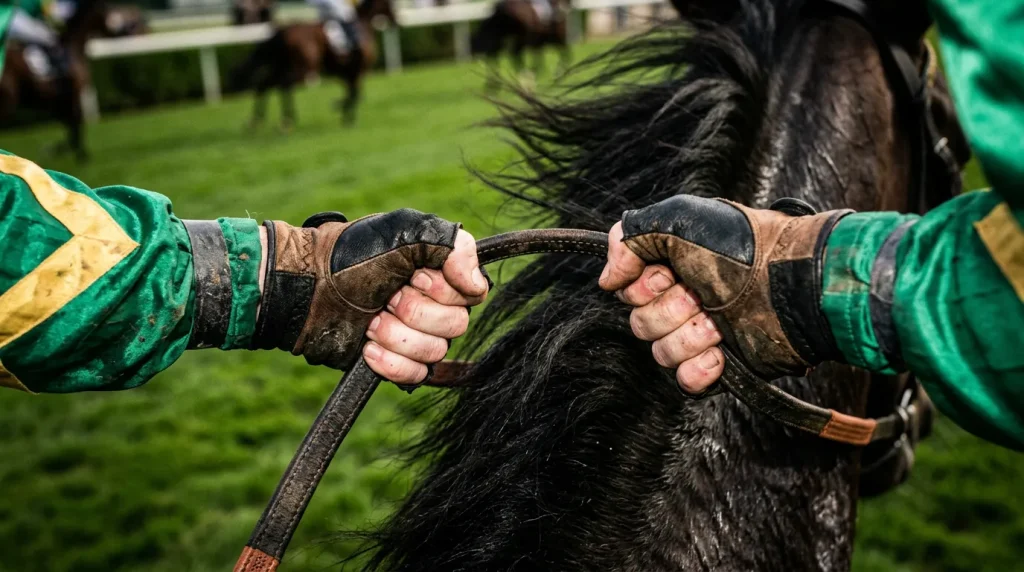
Every horse in a race carries a jockey, and every jockey makes dozens of decisions during the two to five minutes that separate start from finish. Where to position in the field, when to push for the lead, when to sit and wait, how hard to drive in the final furlong — the hands that hold the reins shape outcomes in ways that form figures alone cannot capture. Two horses with identical ability can produce vastly different results depending on who is riding them and how the race is ridden.
Yet many punters treat the jockey as an afterthought. They study form, check the going, note the trainer, and only then glance at the jockey column — if they look at all. That hierarchy undervalues one of the most actionable pieces of information on the racecard. Jockey statistics — win rates, course records, trainer partnerships and booking patterns — are publicly available, free to access, and consistently predictive.
Data from On Course Profits, covering Betfair starting prices over five years, shows that market favourites win roughly 34.4% of the time. But that average conceals enormous variation by rider. Some jockeys turn favourites into winners at well above the baseline rate; others are less effective on fancied horses but excel at coaxing unexpectedly strong runs from outsiders. Understanding which jockeys outperform in which contexts gives you a sharper lens than the blunt instrument of “is this the favourite?”
How Jockey Form and Tactics Influence Race Outcomes
A jockey’s influence begins before the stalls open. Walking the course, observing the ground, talking to the trainer about tactics — these pre-race decisions set the framework for how the race will be ridden. But it is in the race itself that jockeyship matters most.
Pace judgement is the single most important skill. Racing too keenly in the early stages burns energy that will not be there in the final furlong. Dropping too far back in a slowly run race leaves too much ground to make up when the pace lifts. The best jockeys read the tempo instinctively and adjust their horse’s position accordingly, saving fuel for when it counts. In Jump racing, judgement at fences adds another layer — presenting a horse at the right stride, maintaining rhythm over obstacles, and not losing lengths through hesitation or error.
Positioning in the field is the second major lever. On some courses, the rail position offers a significant advantage. On others, wide runners avoid traffic problems and have a clearer run in the straight. Jockeys who know a course’s bias — and have the tactical awareness to exploit it — add measurable value to any horse they ride. A horse with moderate ability but a jockey who steals two lengths through smart positioning may beat a more talented rival saddled with a rider who gets trapped in behind a wall of horses.
The finish — the final furlong — is where strength and timing converge. Some jockeys are known for powerful finishes, driving horses out of a pocket with physical effort. Others are better at timing their challenge, waiting for the right moment to ask and producing one decisive burst. Matching a horse’s running style to a jockey’s strengths is a subtlety the form book misses but experienced bettors should not.
Key Jockey Statistics to Analyse
Win rate is the headline number: the percentage of rides that result in a win. Champion jockeys typically sustain a win rate of 18–25% across a season — roughly one winner in every four or five rides. Journeyman jockeys might sit at 8–12%. The gap is not trivial: over a hundred rides, a 20% jockey produces twenty winners while a 10% jockey produces ten from the same number of opportunities. The top riders do not just get better horses — they also extract more from the horses they do ride.
Place rate adds nuance. A jockey with a 15% win rate and a 45% place rate is consistently getting horses into the frame even when they do not win — valuable information for each-way bettors. If your strategy involves each-way backing, a jockey who reliably hits the places is worth more than one who either wins or finishes nowhere.
Course-specific records are among the most underused metrics available. Jockeys, like trainers, develop familiarity with certain tracks. A jockey who rides regularly at Cheltenham knows where the best ground is, which fence takes more jumping, and where to kick for home. Their course win rate may be 5–10 percentage points above their national average. Checking a jockey’s record at today’s venue takes thirty seconds and can confirm or challenge your selection.
Going performance varies more by jockey than many bettors realise. Some riders are better on soft ground, where strength and balance count for more; others are more effective on quicker surfaces, where timing and finesse dominate. This is not widely reported in standard form data but is accessible through free statistics sites. According to the BHA’s 2026 Racing Report, average field sizes on the Flat sat at 8.90 runners in 2026, with Premier Flat events averaging 11.02. In those larger Premier fields, jockey ability is tested more acutely: bigger fields involve more traffic, more tactical decisions, and more opportunities for a skilled rider to find (or lose) lengths through positioning alone.
Trainer-Jockey Combinations That Outperform
Some trainer-jockey partnerships produce results that exceed what either party achieves separately. This is not mystical. It reflects practical trust: the trainer communicates detailed tactics, the jockey follows them precisely, and over dozens of rides together, they develop a shorthand that produces better race execution. When a trainer and jockey have a combined win rate significantly above the trainer’s average with other riders, that partnership is adding value.
Identifying profitable combinations is straightforward with modern data. Sites like the Racing Post and At The Races publish trainer-jockey statistics that show the number of runners, winners, strike rate and level-stakes profit for each partnership. A trainer with a 12% overall strike rate whose rate with a specific jockey is 22% is clearly deploying that rider on their better-fancied horses — and the jockey is delivering. When that combination runs, the market should notice. Often, it does, and the price shortens accordingly. But not always, and the occasions where the market underprices a strong trainer-jockey combo represent genuine opportunities.
Frequency matters. A trainer who has used a particular jockey on fifty occasions has generated enough data to be meaningful. A partnership with three rides and two winners looks impressive on paper but tells you almost nothing statistically. Look for combinations with at least twenty rides and a strike rate materially above the trainer’s average. The larger the sample, the more confident you can be that the pattern is real rather than coincidental.
Trust between trainer and jockey also manifests in booking patterns. When a top trainer books a jockey several days in advance for an apparently modest race, it sometimes signals that the horse is better than its current form suggests — the trainer is securing their preferred rider because they expect a strong performance. That booking signal, combined with a strong partnership record, is one of the more reliable indicators in racing.
Jockey Booking Changes as a Betting Signal
Jockey bookings are declarations of intent, and changes to those bookings carry even more information. When a trainer replaces an ordinary rider with a top-tier jockey, the signal is hard to ignore: the connections believe the horse has a genuine chance and want the best available rider in the saddle. The reverse — a leading jockey being replaced by a lesser-known one — may indicate that the original rider has chosen a different mount, which itself suggests the horse’s chances have been downgraded by those closest to it.
Late jockey changes deserve particular attention. If a jockey is “jocked off” — replaced close to race day — it usually means either the trainer or owner has lost confidence, or a more powerful stable has claimed the jockey’s services for a fancied runner elsewhere. Either scenario carries implications for the horse’s chances. A late switch to a claiming apprentice, for example, might simply reflect scheduling availability, or it might suggest the horse is not expected to contend seriously.
Apprentice allowances add a tactical dimension. An apprentice jockey claims a weight allowance — typically 3, 5 or 7 pounds — based on their career win total. A 7-pound claim on a horse in a handicap is a meaningful advantage: the horse carries less weight while competing against rivals at their full allotted mark. Trainers who deliberately book high-claiming apprentices for handicap runners are exploiting a structural edge, and when the apprentice also happens to be talented, the combination of weight advantage and riding ability can be potent. Tracking which apprentices are consistently performing above expectation — and which trainers are using them most effectively — is one of the quieter edges available in UK racing.
